








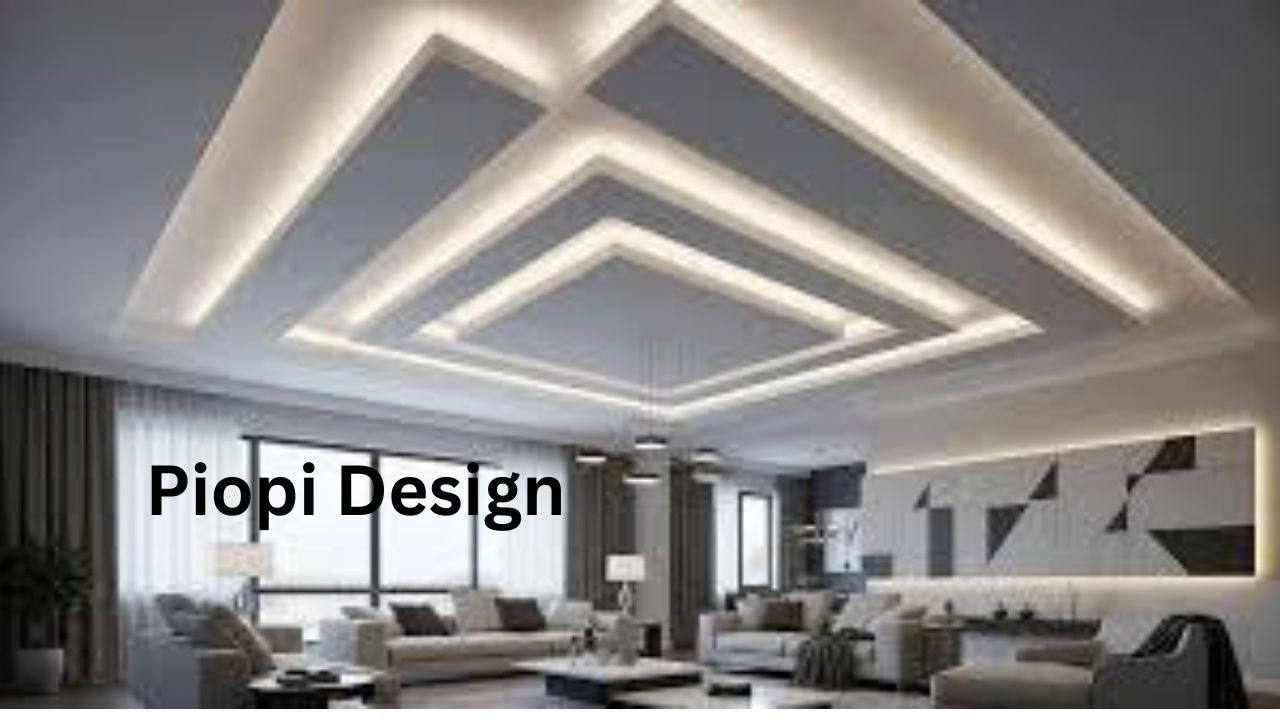

Let’s start simple. If you’ve ever walked into a home and felt that the ceiling looked special, stylish, or just “wow,” chances are you were looking at piopi design. It’s one of those design ideas that quietly changes how a room feels without shouting for attention.
Piopi design is a ceiling design style that uses a smooth plaster material to create shapes, layers, and patterns on your ceiling. Think of it like dressing up your ceiling so it doesn’t look plain or boring anymore. Just like walls need paint and floors need tiles, ceilings also deserve love—and piopi design gives them exactly that.
Many people hear the term and feel confused, but don’t worry. By the end of this section, you’ll understand piopi design so clearly that you’ll be able to explain it to a 10-year-old without breaking a sweat.
So, What Exactly Is Piopi Design?
At its heart, piopi design is a creative way to decorate ceilings using a plaster-based material. This material is shaped while soft and then allowed to dry into solid, smooth designs. Once dry, it becomes strong, neat, and ready for paint or lights.
Imagine clay in an art class. While it’s soft, you can shape it into anything. Once it dries, it keeps that shape. That’s how piopi design works—except it’s done on your ceiling instead of a table.
HomeAndDesigns is your destination for timeless home décor and inspired interior design. We curate elegant, modern, and functional pieces that transform everyday spaces into refined living experiences. From statement accents to subtle details, HomeAndDesigns blends style, comfort, and craftsmanship to help you create a home that truly reflects your taste.
The biggest goal of piopi design is to make your room feel:
- More beautiful
- More welcoming
- More complete
And the best part? You don’t need a huge house or a big budget to enjoy piopi design.
Why Is Everyone Talking About Piopi Design?
One reason piopi design is so popular is because it mixes beauty with comfort. A plain ceiling can feel cold or empty. But a ceiling with piopi design feels warm and finished, like the room was truly planned with care.
Another reason people love piopi design is choice. You can keep it:
- Very simple
- A little stylish
- Or bold and eye-catching
No matter your taste, piopi design can match it.
And here’s something many people don’t realize: ceilings affect how big or small a room feels. A smart piopi design can make a small room feel larger or a tall room feel cozy.
Is Piopi Design the Same as a False Ceiling?
This is where many people get confused.
A false ceiling is a general term. It simply means a ceiling built below the real ceiling. Piopi design is a type of false ceiling—but with more creativity and flexibility.
Think of it this way:
- False ceiling = the idea
- Piopi design = one of the most popular ways to do it
With piopi design, you can create curves, straight lines, layers, and even patterns that look like art floating above your head.
What Is Piopi Design Made Of?
The material used in piopi design starts as a powder. When mixed with water, it becomes a thick paste. This paste is then shaped on the ceiling by skilled hands. Once it dries, it turns hard and smooth.
After that, paint, lights, or both are added. This is why piopi design looks clean and elegant when finished.
What makes piopi design special is how smooth it looks. No rough edges. No messy lines. Just calm, soft beauty.
Why Piopi Design Feels So Good Emotionally
Here’s something interesting: ceilings affect our mood more than we think.
A room with piopi design often feels:
- Safer
- Warmer
- More peaceful
When you sit under a nicely designed ceiling, your mind relaxes. That’s why living rooms, halls, and bedrooms often use piopi design—these are places where we rest, laugh, and spend time with loved ones.
A well-done piopi design can make a house feel like a home.
Is Piopi Design Only for Big Homes?
Not at all.
This is one of the biggest myths. Many people think piopi design is only for large houses or luxury homes. That’s simply not true.
Even a small room can look beautiful with a simple piopi design. In fact, in small spaces, a clean and light ceiling design can make the room feel brighter and more open.
So whether you live in:
- A small apartment
- A medium-sized home
- Or a large house
piopi design can be shaped to fit your space.
Simple Example Anyone Can Understand
Let’s say your room is like a birthday cake.
- The walls are the sides of the cake
- The floor is the base
- The ceiling is the top
Would you leave the top plain? Of course not. You’d decorate it. That’s exactly what piopi design does—it decorates the “top” of your room.
Why Piopi Design Works So Well in Everyday Homes
People choose piopi design because it balances style and comfort. It doesn’t feel too fancy, and it doesn’t feel boring either.
Here’s why it fits everyday life so well:
- It looks good for many years
- It works with almost any furniture
- It can be simple or stylish
- It doesn’t overwhelm the room
A good piopi design quietly makes your home better without demanding attention.
Is Piopi Design Safe?
Yes, when done properly.
A correctly installed piopi design is strong and secure. It stays in place for years and doesn’t cause trouble. Like anything in a home, the key is proper work and care.
When people choose piopi design, they’re choosing something trusted and widely used in homes around the world.
Can Piopi Design Fit Your Budget?
Another big reason people love piopi design is flexibility. You don’t need to spend a lot to get a nice look.
You can choose:
- A very simple design (low cost)
- A layered design (medium cost)
- A detailed design with lights (higher cost)
This means piopi design works whether you’re careful with money or ready to invest a little more.
Why Piopi Design Is Still Loved Today
Trends come and go, but piopi design has stayed popular because it adapts. It changes with time, styles, and needs.
New homes still choose piopi design because it:
- Feels modern
- Feels clean
- Feels welcoming
It doesn’t try too hard. It just works.
A Quick Summary Before We Move On
Let’s wrap this up simply.
Piopi design is:
- A ceiling design style
- Made from smooth plaster
- Used to add beauty and comfort
- Suitable for big and small homes
- Easy to customize
Most importantly, piopi design helps turn a simple room into a space you enjoy being in.
In the next section, we’ll explore why this design has become so popular in modern homes and how it fits perfectly with today’s lifestyles.


