








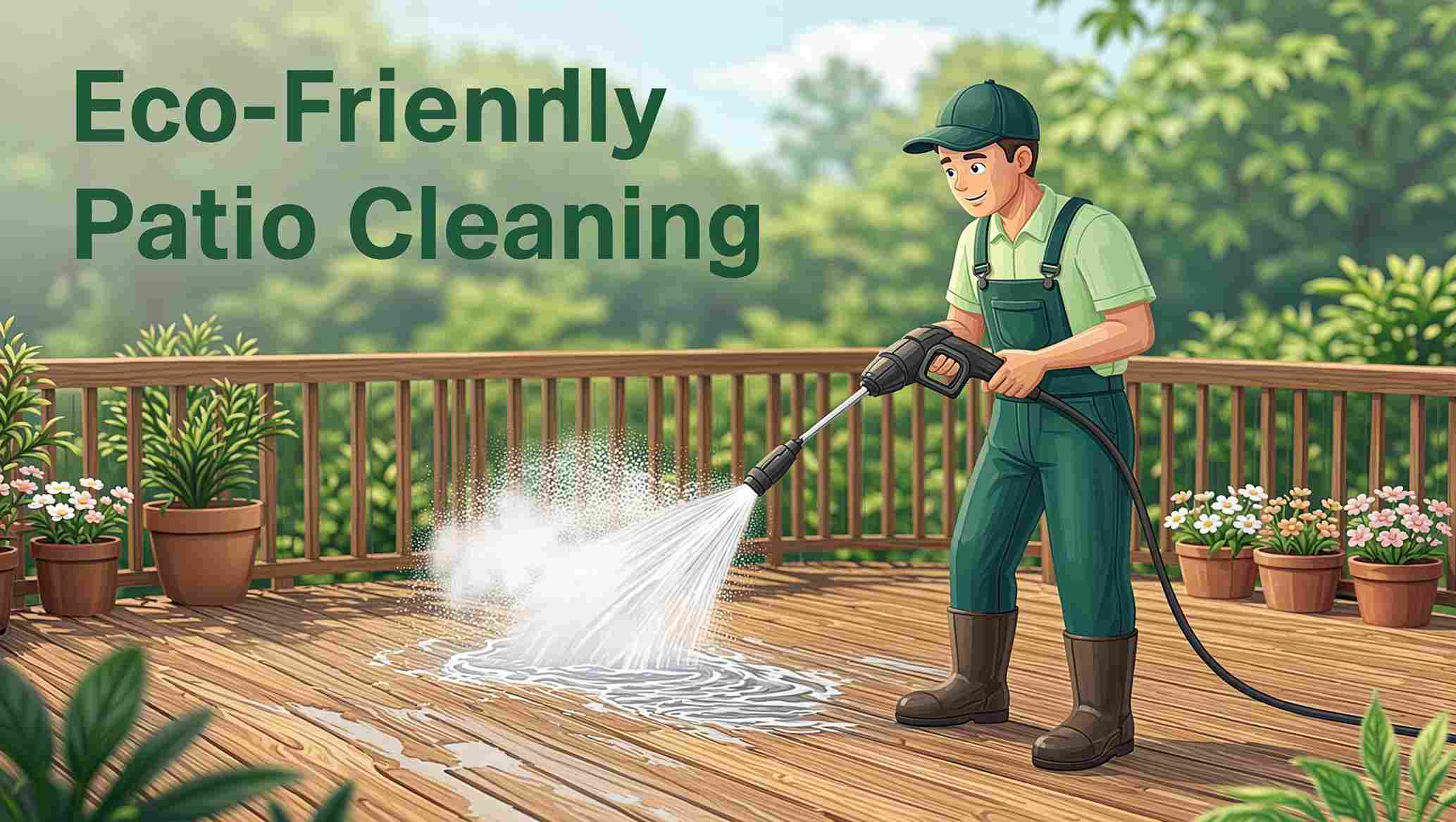

Your patio has seen things—last summer’s barbecue, that one wine-tasting evening that got a bit out of hand, and three seasons of British weather doing its absolute worst.
And yet, there it sits, waiting for you to restore it to its former glory without dousing your whole garden in chemicals.
Luckily, you don’t need any of that. Here’s how to get your patio spotless, step by step, using methods that won’t make you feel guilty about the state of the planet.
Match Your Tools to the Job
A simple patio cleaning session can turn into a full production if you’re using the wrong tools. But don’t worry; you don’t have to splurge on expensive ones. You only need a couple of basics.
A natural bristle scrubbing brush will handle most patio surfaces without scratching them to bits, and it’s solid enough to last if you rinse it off now and then.
For anything that needs a lighter touch, like furniture or smoother finishes, microfibre cloths are your best bet. They actually pick up dirt instead of just spreading it around like it’s part of the decor.
And no matter what you do, skip single-use wipes. They promise convenience, then leave you with half-cleaned surfaces and a bin full of regret. A damp cloth will do the job without the waste.
Keep everything in one place, too. If your kit is easy to grab, you’re far more likely to deal with small messes as they come up, instead of letting them build into a weekend project you didn’t sign up for.
Clear the Decks
Before you reach for any cleaning products, clear everything off your patio. Move the furniture, the plant stands, and that mystery object you’ve been stepping around since April.
Then, sweep everything thoroughly. A stiff-bristled brush will help you remove loose debris, leaves, and the kind of grit that scratches surfaces if you go straight to scrubbing. It’ll take only five minutes, but it’ll make every step after it easier.
And if you can, do this on a dry day; it’s quicker, more effective, and you won’t end up chasing damp debris around.
Try Natural Cleaning Solutions
Here’s where most people overcomplicate things. You don’t need a trolley full of specialist cleaners. You need three things from your kitchen cabinet: white vinegar, baking soda, and lemon juice.
- White vinegar. This is your go-to for general grime and light algae. It’s mildly acidic, which helps break down buildup without much effort. Mix it roughly 50/50 with water, pour it over the surface, leave it for about 10 minutes, then give it a good scrub.
- Baking soda. You can use it for tougher stains like grease, rust marks from furniture, or darker patches near drains. Mix it with a little water to form a paste, apply it directly to the area, leave it for 15 minutes, then scrub with a stiff brush.
- Lemon juice. It’s particularly useful for cutting through grease, with the added bonus of leaving everything smelling fresh. You can use it on its own or mix it with baking soda for a fizzing reaction that helps lift dirt.
All three options are cheap, safe for pets and plants, and won’t send anything dangerous into your soil or drains.
Tackle Moss and Algae the Green Way
Moss and algae don’t need much encouragement in the UK. Give them a bit of shade and the usual damp weather, and they’ll settle in quickly, especially if your patio is north-facing or shaded.
Left untreated, they make surfaces slippery and gradually break down the material underneath.
The fix is simple, though: use a diluted white vinegar solution, apply it generously, and give it 20–30 minutes to work its magic before scrubbing.
For heavier growth, you can grab a plant-based, biodegradable patio treatment that won’t harm your surrounding plants or soil.
And while bleach might seem like the obvious shortcut, it comes with side effects. It can damage the soil, kill off the good microorganisms your garden actually needs, and even strip colour from certain paving. So, it solves one problem and creates a few more.
Use a Pressure Washer
Pressure washers are one of those tools that are either incredibly useful or destructive, depending on how enthusiastic you get with them.
If you care about keeping things a bit greener, pressure washers make more sense than you might expect. They use less water than a standard hose and get the job done without relying on chemical cleaners.
The trick is using the right pressure. Too high, and you’ll blast out the jointing sand between paving slabs, damage softer stone, or send dirt flying onto your freshly cleaned furniture. A medium setting, around 100 to 130 bar, is enough for most patios.
However, if buying a pressure washer feels like overkill for how little you’ll actually use it, you can always look into professional help. Try googling ‘patio cleaners London’ to find services that handle larger areas using low-chemical or chemical-free methods.
Dispose of Waste Properly
Once you’re done cleaning, try not to send dirty water straight down the drain, especially if it’s full of grime or any kind of cleaning product, even the natural ones. Letting it run off into soil or a suitable area where it can filter naturally is usually the better option.
You should also keep organic debris, like leaves and moss. Add it to your compost instead of binning it. It takes 10 seconds to redirect it to a compost heap, and it’ll do your garden soil real good down the line.
Finally, if you’ve used any commercial products, check your local council’s guidance on disposal. Even biodegradable options aren’t always meant to go straight into drains, and most UK councils have facilities to deal with them safely.
Keep on Top of It Week to Week
If you stay on top of things week to week, it’ll never get out of hand. A quick sweep, a wipe here and there, and you’re done. It’s the difference between spending five minutes now or losing an entire afternoon later, wondering how it got this bad.
Spills are where it usually starts to go wrong. You think you’ll deal with it later, and suddenly that small splash of wine or oil has settled in. So, sort it as soon as it happens. Blot the mark, then go in with a bit of baking soda paste before it has time to dig in.
This way, you won’t need to deep clean more than once or twice a year, and you won’t reach that point where you eye harsh chemicals like they’re the only solution left.
Conclusion
There you go—you now have a patio so clean that it sets the bar a little higher for your neighbours.
All it took was some natural solutions, a bit of elbow grease, and the willpower to not just hose everything into the drain and call it a day.
Sustainable living doesn’t have to be complicated, and your patio is living proof of that. Now, go enjoy it before the British weather has other ideas!


